Why choose a hybrid general meeting?
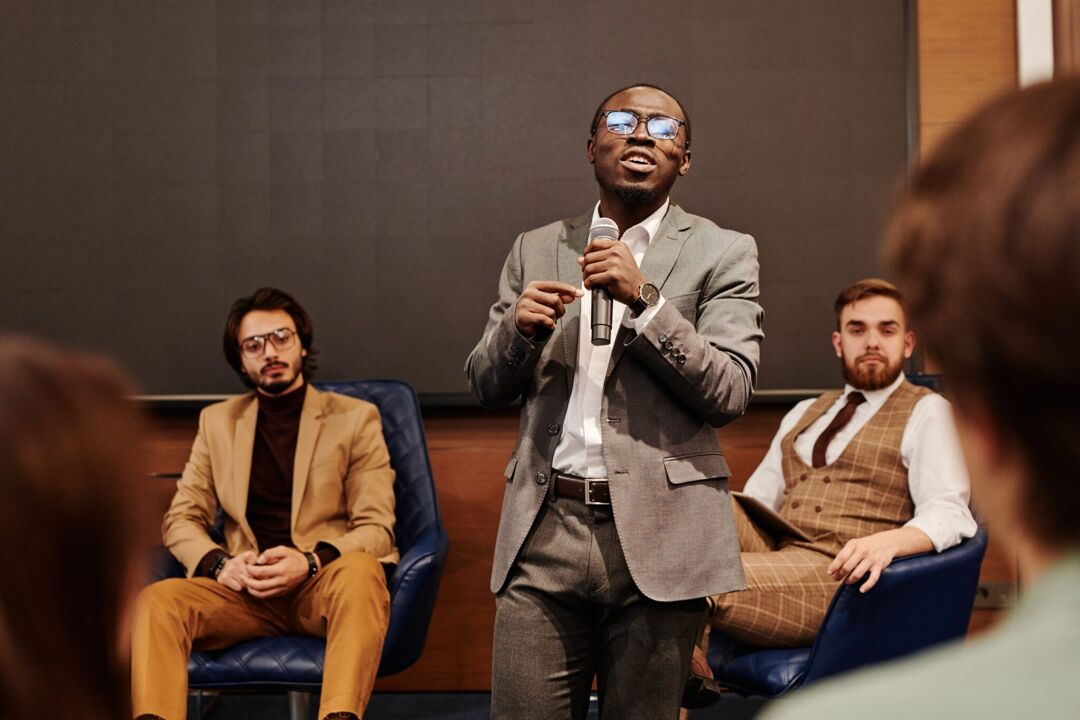
The hybrid general meeting meets a dual requirement: maintaining a high-quality in-person experience while offering broader digital access. This format lets attendees choose how they attend, depending on their geographic, professional or personal constraints. Beyond flexibility, hybrid becomes a strategic lever. It increases the participation rate, improves the spread of information and makes it possible to reach audiences that are usually absent. In a context where transparency and engagement are essential, particularly for listed companies or associations, the hybrid general meeting becomes a modern governance tool. Finally, it fits into a logic of cost optimization and environmental impact. Less travel, better logistics and lasting digital distribution (replay) make it a particularly relevant format.
The Essentials of a Successful Hybrid Organization
Organizing a hybrid general meeting can’t be improvised. It is essential to think of the event from the outset as a dual experience, not as a simple in-person event streamed online. This means designing a coherent attendee journey, whatever the mode of participation. Registration must be smooth, with a clear split between on-site and remote attendees. Invitations and reminders must be tailored to each profile to maximize participation. Logistics also plays a key role. The on-site welcome (check-in, badges, signage) must be perfectly coordinated with the digital experience (login, access to the live, interactions). A centralized event website ensures this consistency and avoids a proliferation of tools.
Ensure a seamless and professional digital broadcast
The heart of a hybrid general meeting is the quality of its digital broadcast. The live stream must be stable, accessible and suited to every type of connection. It’s not just about relaying a video, but about creating a real digital experience. The choice of tools is therefore decisive: broadcast platform, access management, replay available right after the event. Adding features such as translation, subtitles or adaptation to different time zones can also improve accessibility. The goal is to ensure remote attendees get an experience equivalent to those on site.
Encourage engagement among both remote and in-person participants
One of the main challenges of a hybrid general meeting is keeping attendees’ attention and engagement, especially remotely. To do so, it is essential to build in interactive tools: live questions (Q&A), votes, polls or quizzes. These features energize speaking slots and create real-time interaction. The social wall or discussion spaces can also strengthen the sense of collective participation. On the in-person side, these interactions enrich the experience, while on the digital side, they make up for physical absence. Finally, moderation plays a central role: it helps structure the exchanges and gives visibility to attendees’ contributions.
Organizing data and measuring performance
A hybrid general meeting generates a large amount of data: registrations, logins, interactions, votes, time attended. Centralizing this data is essential for analyzing the event’s performance. Statistics let you measure engagement, identify key moments and optimize future editions. Post-event reports also support internal and external communication. They let you highlight participation, demonstrate the event’s impact and meet regulatory obligations. In some cases, integration with CRM tools or internal systems lets you go even further in using the data.
Build on the event and extend the experience
The general meeting doesn’t end on the day. The post-event phase is essential to extend the impact and make the most of the content produced. Making the replay available lets those who were absent view the discussions and attendees revisit key moments. Post-event communications (emails, summaries, reports) strengthen transparency and the relationship with attendees. It’s also the opportunity to collect feedback and improve future editions. A well-thought-out strategy turns the general meeting into a genuine tool for ongoing communication.
FAQ
In what situations should a general meeting be held in a hybrid format rather than in person?
The hybrid format is useful when participants are geographically dispersed or have work-related constraints that limit their ability to travel. It helps increase participation rates and reach audiences that would otherwise be absent. This is particularly useful for publicly traded companies or associations, for whom transparency and member engagement are key. It also reduces travel, thereby lowering costs and minimizing environmental impact, and the replay feature extends the reach of the discussions. On the other hand, it requires designing a dual experience from the outset. AppCraft allows you to manage both audiences from a single platform.
How can you engage remote participants during a hybrid general meeting?
By giving them the same tools to interact as in-person participants. Live questions, votes, polls, and quizzes encourage active participation, and a social wall or discussion forums reinforce the sense of collective involvement. Moderation is essential for structuring discussions and highlighting contributions. The broadcast must also be stable and accessible regardless of the connection, with translation, subtitles, or time zone adjustments as needed. With AppCraft, live streaming and engagement tools operate within the same environment as event registration.
What is the most common mistake made when organizing a hybrid general meeting?
Treat it as a physical event that’s simply being streamed online. A hybrid general meeting must be designed from the outset as a dual experience: a registration process that clearly distinguishes between on-site and remote participants, invitations and follow-ups tailored to each profile, and an on-site welcome (check-in, badges) coordinated with access to the live stream. Using multiple tools complicates this coordination. Another common oversight: neglecting the post-event phase (replays, summaries, reports, and feedback collection). A centralized event platform like AppCraft’s helps ensure a consistent experience for everyone.
to change image ·